Every school can show you a polished brochure and a well-kept campus. Those matter, but they won’t tell you what your child’s days will feel like. As a parent, you want to understand how your child will be supported, challenged, and encouraged to grow—and whether they will feel known as an individual.
A school visit is a chance to explore those everyday experiences. Beyond the facilities and curriculum overview, it helps to ask who will notice when your child needs support, how their interests will be nurtured, and what the school hopes they will carry with them when they leave.
Choosing the right school begins with understanding what matters most to your child. Thoughtful questions can help you look beyond first impressions and get a clearer picture of the people, priorities, and practices that shape school life.
In this article, I share four questions worth asking when choosing a school for your child, based on my experience teaching and leading international schools across Asia.
Will my child be truly known and supported?
Ask who, specifically, is responsible for knowing your child well. Not just the school in general, but a named adult. Look for a clear structure: an advisory program, regular check-ins, and someone who notices when a student goes quiet or stops feeling challenged.
A school can have excellent teachers and still let a child go unseen. A strong advisory program helps prevent that by ensuring someone pays attention to how each student is doing beyond their grades. At RAS Jakarta, students work with an advisor who tracks their individual progress, recognising that academic results tell only part of a child’s story.
Who will my child become beyond their grades?
Many schools answer this question with a list of university acceptances. That is a useful measure, but it describes where students go, rather than who they have become. Ask what the school hopes its graduates will be able to do. Can they communicate clearly, work with people who think differently, and solve real-world problems?
RAS Jakarta’s Portrait of a Graduate starts with qualities such as adaptability, collaboration, ethical reasoning, and creative problem-solving. These qualities matter beyond the next exam, shaping how students approach new challenges, work with others, and make decisions throughout their lives.
How does the school treat art, music, languages, and PE?
This question can reveal a school’s priorities quickly. In some schools, these subjects are treated as enrichment and are the first to be squeezed out when the timetable gets tight. In others, they are part of the core. Ask how they fit into the school week and whether every child has regular opportunities to take part.
At RAS Jakarta, art, music, languages, and PE are treated as core parts of the learning experience. A child who plays an instrument learns to listen. A child who trains with a team learns to persevere. A child who learns another language gains insight into other cultures.
These subjects are not a distraction from academics. They are an essential part of a well-rounded education, giving children different ways to express themselves, connect with others, and discover their interests. They are where much of the learning that matters most happens.
What is the school’s honest answer about AI?
AI is a question on many parents’ minds, yet some schools ignore it while others oversell their response. Ask how students are taught to use these tools, and just as importantly, what the school believes AI cannot do.
The more capable AI becomes, the more valuable humans become. Curiosity, judgment, empathy, and the ability to lead others are not things a machine can hand to a child.
At RAS Jakarta, the emphasis is on using AI ethically while nurturing the human qualities of each individual. For parents choosing a school, it is worth asking how that balance takes shape in everyday learning: how students learn to use AI responsibly while continuing to develop their own curiosity, judgment, empathy, and leadership.
No single answer determines whether a school is right for your child. What matters is the pattern: real people, real programs, and a clear commitment to helping your child grow beyond the next exam.
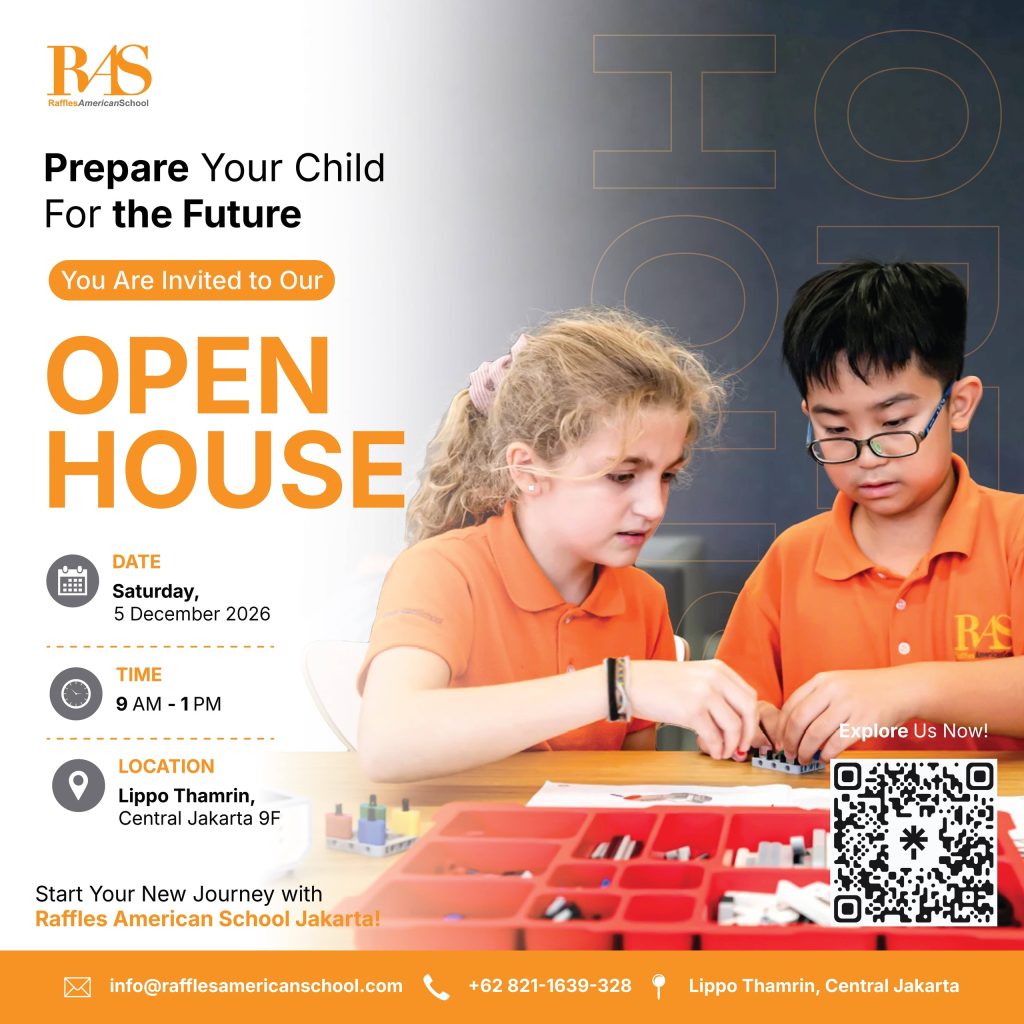
Join our Open House on 5th December at Raffles American School Jakarta to explore our learning approach, meet our team, and ask the questions that matter most to your family.
Head of School
Raffles American School